
FMAD 3230 Appearance, Dress, and Diversity Textbook
Overview of Module
In this chapter, you will
- Identify foundational concepts related to disability, fashion, identity, appearance, and dress.
- Identify different types of dress worn by people with disabilities in the United States.
- Identify the experiences of people with disabilities in the United States wearing different dress objects reflecting their disability identities.
- Identify different fashion brands that produce and sell dress objects for people with disabilities in the United States.
- Explain the role of dress and appearance in the development of one’s disability identity.
- Examine how dress and appearance of people with disabilities in the United States are represented in the fashion system (e.g., advertisements or retailers).
- Examine social justice issues related to dress and appearance for people with disabilities in the United States.
- Deconstruct your own perspectives and approach to understanding the dress and appearance of people with disabilities in the United States.
- Identify the driving forces of transformative social justice change in the fashion system related to disabilities in the United States.
Content
A disability is any condition of the body or mind that makes it more difficult for a person to do certain activities and interact with the world around them. Disabilities may affect a person’s vision, movement, thought, memory, learning, communication, hearing, mental health, and social relationships. Disabilities generally have three dimensions:
- impairment in a person’s body structure of function, or mental functioning, such as loss of a limb, loss of vision, or memory loss.
- activity limitation, for example, causing difficulty seeing, hearing, walking, or problem-solving.
- participation restrictions: affecting daily activities such as working, engaging in social and recreational activities, and obtaining health care and preventive services.
Disabilities can be present from birth, develop over time, be caused by injury, be long-standing conditions, or be progressive.
History of the Disabilities Rights Movement
Individuals with disabilities have unique needs that historically have not been met. In addition to needing support, funding, and services, individuals with disabilities have also found themselves discriminated against and stigmatized by individuals, businesses, and potential employers. This led to the rise of a movement advocating for change in the latter 20th century.
Watch this video to learn more about the disability rights movement:
In 1990, the Americans with Disabilities Act (ADA) was passed to help support individuals with disabilities living in the United States. This act was revised in 2006 to account for the accessibility issues that had become apparent with the popular use and integration of the Internet into individuals’ daily lives. There are five major sections within the act:
- Title I created equal employment rights for people with disabilities to remedy barriers at all stages of employment, including the fairness in the hiring process and reasonable accommodations throughout employment, training, and promotion.
- Title II requires public entities to provide equal access to all government programs and services.
- Title III requires equal access to businesses, including hotels, schools, museums, live theaters, restaurants, stores, and more.
- Title IV requires that telecommunications access be provided.
- Title V includes a variety of other provisions, including protection from retaliation when individuals assert these rights.
According to US Census data, nearly 19% of individuals in the United States are living with a disability (US Census Bureau, 2021). This includes, among others,
- 2 million people who are blind
- 7.6 million people who have difficulty hearing
- 9.4 million people who have difficulty grasping or lifting objects
- 30.6 million people who have mobility difficulties (difficult walking, necessitating the use of a wheelchair, cane, crutches, or walker)
With these disabilities comes the need for accommodations, not just through legal means like the affordances provided through the ADA but also through accessories and clothing that support or at least do not actively harmn an individual with a disability.
Hearing Devices
Individuals experience various degrees of hearing loss, from mild cases to more severe ones. A breakdown of degrees of hearing loss is provided below:
- mild: has some difficulty keeping up with conversations.
- moderate: has difficulty keeping up with conversations when not using a hearing aid.
- severe: benefits from powerful hearing aids but often relies on lip-reading; some use sign language.
- profound: is very hard of hearing; relies mostly on lip-reading and/or sign language.
Hearing aids are electroacoustic devices designed to amplify sound, with the goal of making speech audible for people with varying levels of hearing loss. The invention of the telephone inspired the development of the first electronic hearing aid in 1898.
The first hearing devices were speaking tubes, trumpets, and cups, devices with conical or wider openings that funneled sound into a smaller pipe and into the ear of the user. As technology developed, body-worn hearing aids came into popular use, making it easier for individuals to bring their hearing aids “on the go.”
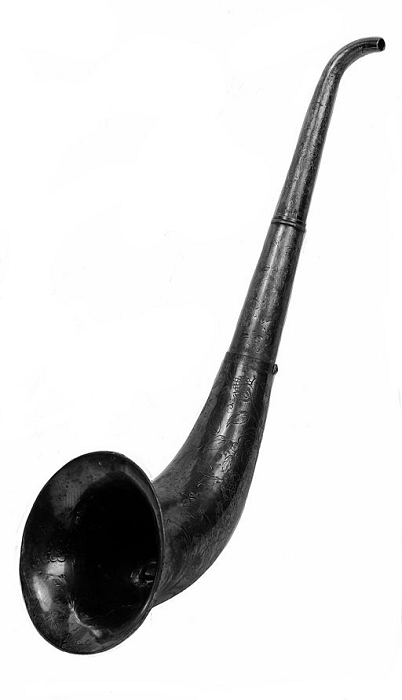

Smaller hearing aids worn behind or in the ear were developed in the first half of the 20th century. These hearing aids, still in use today, continue to be improved. The most recent development in hearing devices is the cochlear implant. First developed in 1972, the cochlear implant consists of an internal device that is surgically implanted, with an external component worn near the ear.
Aesthetics of hearing devices
The design of hearing aids varies widely, from functionally basic designs to stealthier jewelry-based designs meant to blend in with one’s hair or clothing, like the glasses featured below:
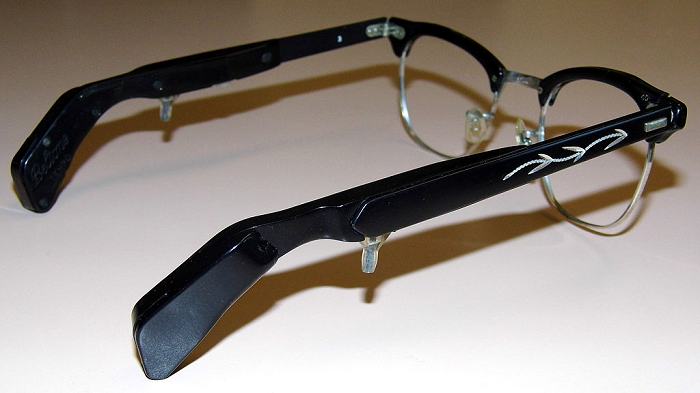
,_Sales_Model,_Made_In_USA,_Circa_1967_(14885604170).jpg)
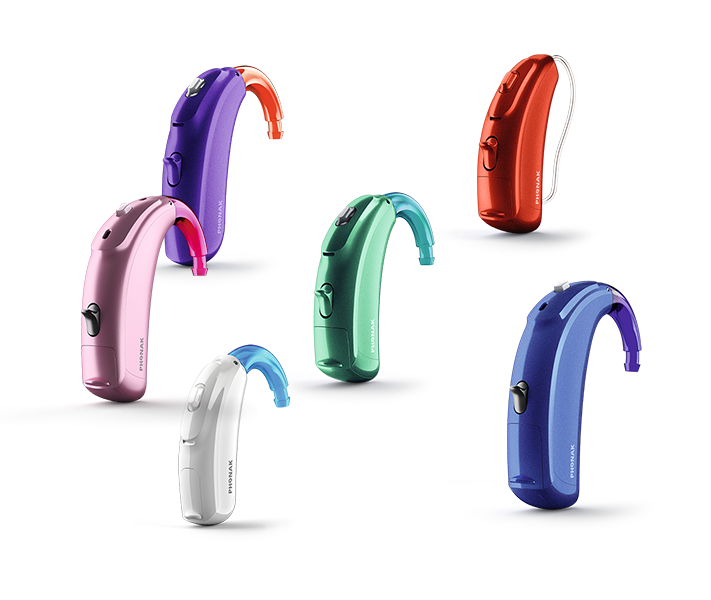
Some hearing aid users have an interest in their devices’ aesthetics. In contrast to the designs meant to “blend in,” some behind-the-ear hearing aids are created with bright, fun patterns or in humorous shapes to draw attention to the device as a part of the user’s dress, like these colorful hearing aids from Phonak (Phonak, 2021):
In a study that talked to a small group of adolescents about their perspectives on their hearing aids or cochlear implants, half of the participants reported medium to low self-esteem, with 5 of 8 total participants stating that when they met new people, they were treated as if they were stupid (Ellington & Lim, 2015).
Mobility Impairment and Dress
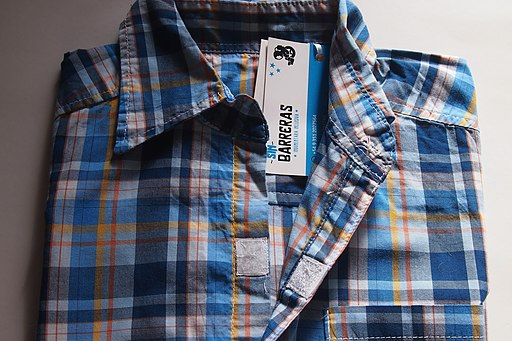
Mobility impairment is a person’s inability to use one or more of their extremities or a lack of strength to walk, grasp, or lift objects. Because the fashion industry has largely been built for able-bodied people, the needs of individuals with mobility impairment, who cannot easily grasp zippers or manipulate button closures, have been heavily affected by the clothing options available to them. Luckily, this has begun to change in the 2010s as more adaptive clothing has entered the market.

Adaptive design
The fashion industry has largely been built for able-bodied people.
Adaptive design refers to designs created for people with disabilities. The industry does not call its lines “able-body designs,” yet when companies label their clothes “adaptive designs,” the nonadaptive designs labeled, for example, as “womenswear” are assumed to be for able-bodied people.
Numerous companies exist that create adaptive designs (Matchar, 2018). Some, such as Adaptions by Adrian, Buck & Buck, and Silvert’s Adaptive Clothing & Footwear, are smaller and niche companies focusing just on adaptive designs. Other companies include Rebirth Garments, which focuses on designs aimed at gender non-conforming, trans, and disabled individuals.
Watch this short TedEd video to learn more about how adaptive clothing can support those who need it most:
Even larger companies such as Target, Tommy Hilfiger, and Nike have incorporated adaptive lines into their already existing assortments (Pitman, 2017; Tommy Hilfiger, 2021; Nike, 2021).
Prosthetics
Prosthetics may be integrated into dress for individuals who are missing limbs. Prosthetics are artificial devices that replace missing body parts, which may have been lost through trauma, disease, or congenital conditions. These devices were originally designed in peg shapes for legs and hook shapes for hands. However, these prosthetics have considerably advanced in complexity. For example, arms have been refined first through the development of a harness that could open and close the hook or a facsimile hand in order to grasp objects. Today, hand prosthetics can be controlled by electrical signals from the muscles in the remaining portions of the arm, though these are very expensive.
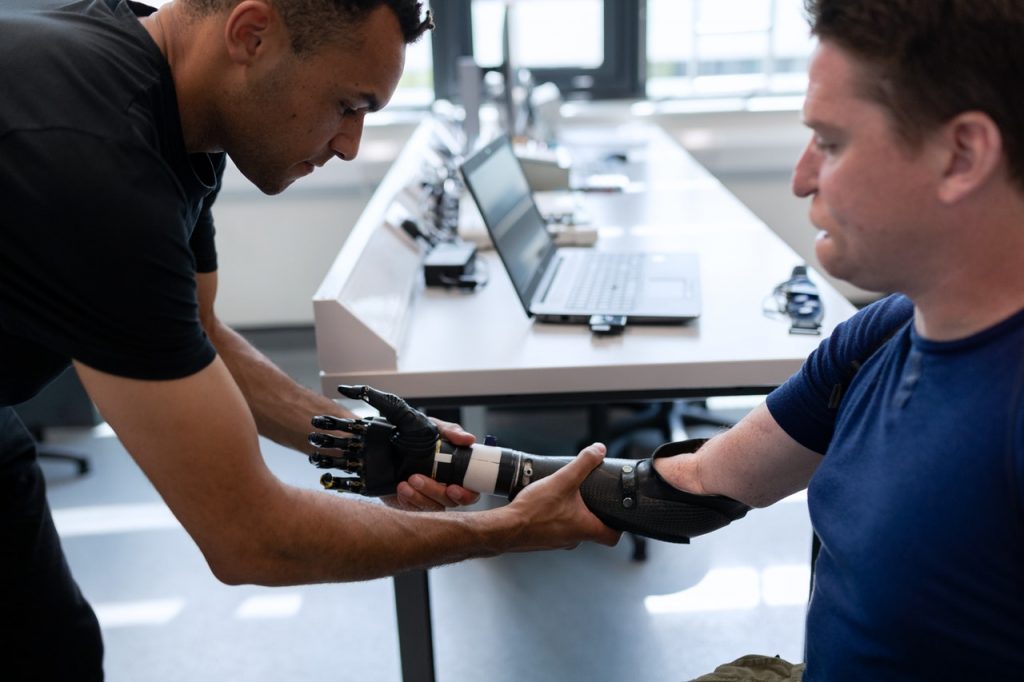
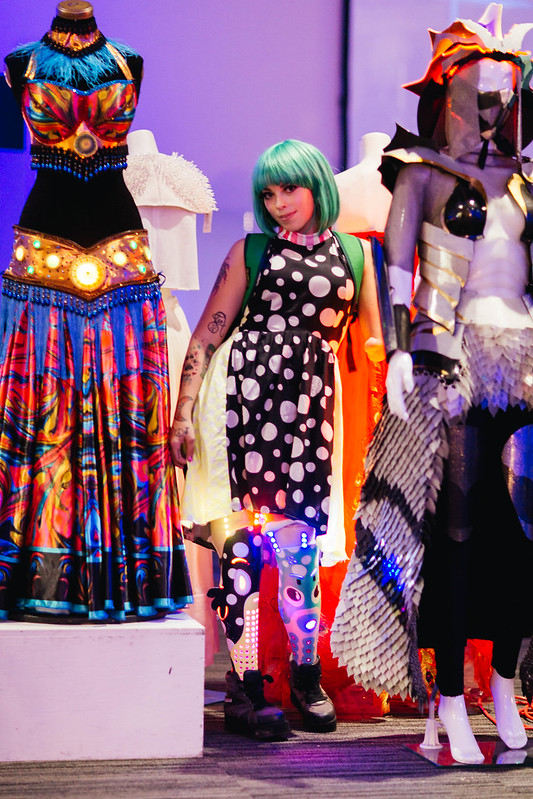
Similar to hearing aids, prosthetics can “blend in” with the rest of an individual’s body, or they can be augmented through designs to make them stand out.
Required Reading
Required Reading:
Centers for Disease Control and Prevention. (n.d.). Disability and Health Overview. Retrieved from https://www.cdc.gov/ncbddd/disabilityandhealth/disability.html
Ellington, T., & Lim, S. (2016). (dis)ABLED BEAUTY: The evolution of beauty, disability, and ability. https://oaks.kent.edu/ksumuseum/3